
Why Marie Antoinette Showed Up All Over Fashion Week This Year
Section: Fashion
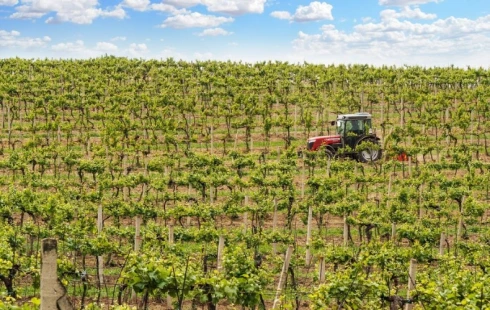
According to the Comité Champagne, the industry body representing the region's growers and houses, the 2026 season was shaped by severe spring frosts, an exceptionally early flowering period, and repeated summer heatwaves conditions the Comité's own assessment called one of the most atypical growing seasons in the region's history. The traditional harvest start date was set for August 12, but picking had already begun in some plots by August 6, and by August 17 harvesting had spread across the entire region roughly two weeks earlier than in 2025.
The drought conditions shrank grape bunch sizes, pushing average yields to a moderate level. But according to the Comité, the fruit itself came through in excellent health, with what the organization describes as very promising balance across the harvest. Maxime Toubart, president of the Syndicat Général des Vignerons de la Champagne and co-president of the Comité Champagne, said growers had to adapt their vineyard practices throughout an unusually demanding season to bring in a harvest of this quality.
The pattern held across French wine regions this year, not only in Champagne. In the Rhône Valley, growers reported similarly early picking dates and strong overall vine health, with some appellations including Clairette de Die recording their earliest harvest ever. Bordeaux's harvest also came in early, with the region's trade body describing the vintage as showing great promise despite the unusual conditions. Nationally, French wine authorities delayed their annual harvest volume forecast by roughly a month this year, citing how unpredictable the combination of heatwaves, drought and localized wildfires had made early-season projections.
It's a common assumption that extreme heat damages a wine harvest, but that's not automatically true for grapevines the way it is for many other crops vines are relatively drought-tolerant compared to other agriculture, provided a region enters the dry season with healthy water reserves in the soil. That's largely what happened in Champagne and the Rhône this year: a wet winter recharged groundwater ahead of the heat, giving vines enough reserve to survive the summer's stress without the fruit quality collapsing. The result, according to growers across multiple regions, is smaller yields paired with fruit that reached ripeness in exceptional condition the combination winemakers generally associate with a standout vintage rather than a weak one.
It will be at least a few years before the 2026 Champagne vintage reaches consumers in bottled form, given the region's minimum aging requirements, so the immediate impact of this harvest is more about industry sentiment than shelf prices today. For now, growers across Champagne, Bordeaux and the Rhône are treating the season as a genuine bright spot in an increasingly unpredictable climate pattern for French viticulture cautious optimism, built on a harvest that arrived weeks ahead of schedule and, against expectations, in excellent shape.
Sources: Comité Champagne; Wine Industry Advisor; Wine Spectator.
Photo by energepic.com on Pexels
Section: Fashion
Section: Business
Section: News
Section: Arts

Section: Health

Section: Politics

Section: Science

Section: Business

Section: News
Section: Arts
Both private Health Insurance in Germany and public insurance, is often complicated to navigate, not to mention expensive. As an expat, you are required to navigate this landscape within weeks of arriving, so check our FAQ on PKV. For our guide on resources and access to agents who can give you a competitive quote, try our PKV Calculator.
Germany is famous for its medical expertise and extensive number of hospitals and clinics. See this comprehensive directory of hospitals and clinics across the country, complete with links to their websites, addresses, contact info, and specializations/services.
Didn't manage to get a ticket for Linkin Park? Or still not enough after the concert? Join us at CRASH on June 12th for our "IN THE END" Linkin Park Special + CORE NIGHT.All night long, we'll be playing Linkin Park's music, along with Nu Metal, Metalcore, and Alternative Rock from bands such as Limp...


No comments yet. Be the first to comment!