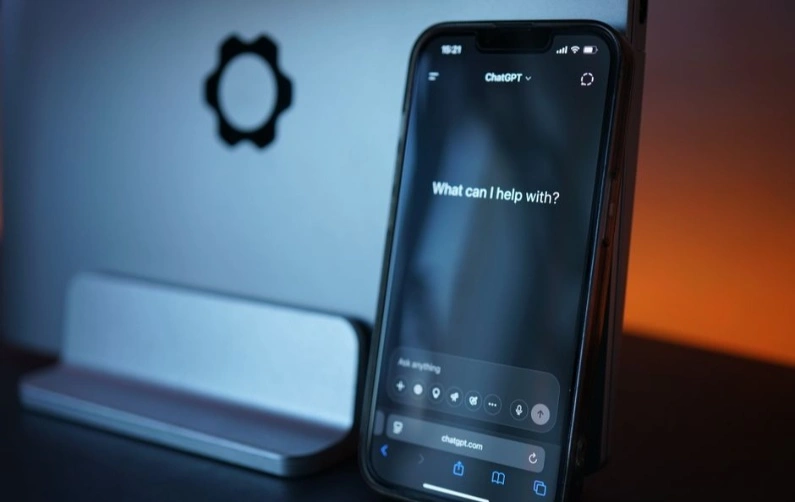
French Expert Commission Presents 18 Recommendations to Regulate AI Chatbots
Section: Health
Updated November 11, 2026.
Since October 15, 2026, people in France with a long-term illness that health insurance does not cover at 100% can receive daily sick pay (indemnités journalières) for a maximum of one year, down from three. The change comes from decree no. 2026-866 of September 16, published in the Journal officiel on September 18.
The one-year limit applies to people with an “ALD non exonérante,” a long-term condition for which patients still pay the usual share of medical costs. Those with an exempting ALD, covered at 100%, keep the three-year maximum, according to the government’s Code du travail numérique. After at least one year back at work, an employee can open a new one-year period for the same illness, or a new three-year period for an exempting ALD.
The one-year limit applies to work stoppages prescribed from October 15 and to stoppages already under way that reach six months after that date. Employees who were already off work for more than six months on October 15 keep the three-year maximum until their stoppage ends. The decree does not change how long a doctor can prescribe a stoppage, only how long the Assurance Maladie pays, according to Syndicalisme Hebdo.
A document from the national health insurance fund (CNAM), cited by Informations Handicap, put the cost of daily allowances for non-exempting ALD at €3.17 billion, three times those for exempting ALD, with the number of stoppages growing by more than 6% a year. Exempting ALD affected more than 13 million people in 2024, according to the CNAM.
Syndicalisme Hebdo described the measure as unfair and dangerous, saying it shortens the period in which an employee can receive replacement income.
People who are unsure whether their condition is exempting can ask their doctor or their Assurance Maladie fund. More in our Health section.
Read also: 3,000 junior doctors sent to address medical shortages in France, and French dietary supplement market grows amid rising anxiety.
Source: Code du travail numérique; Informations Handicap; RH News; Syndicalisme Hebdo. Published September 18 to November 2026.
Section: Health

Section: News

Section: News

Section: Fashion
Section: News

Section: Health

Section: Health

Section: News
Section: Politics

Section: Arts
Both private Health Insurance in Germany and public insurance, is often complicated to navigate, not to mention expensive. As an expat, you are required to navigate this landscape within weeks of arriving, so check our FAQ on PKV. For our guide on resources and access to agents who can give you a competitive quote, try our PKV Calculator.
Germany is famous for its medical expertise and extensive number of hospitals and clinics. See this comprehensive directory of hospitals and clinics across the country, complete with links to their websites, addresses, contact info, and specializations/services.
Didn't manage to get a ticket for Linkin Park? Or still not enough after the concert? Join us at CRASH on June 12th for our "IN THE END" Linkin Park Special + CORE NIGHT.All night long, we'll be playing Linkin Park's music, along with Nu Metal, Metalcore, and Alternative Rock from bands such as Limp...

No comments yet. Be the first to comment!