
Inside the Louvre's €800 Million Plan to Give the Mona Lisa Her Own Room
Section: Arts
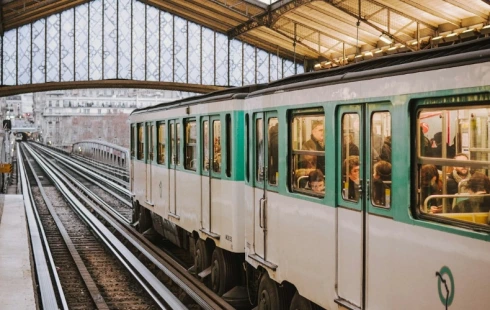
For anyone staying in Paris more than a few weeks, the Navigo card a rechargeable transit pass is worth setting up in the first days, not once the novelty of buying paper tickets wears off. It comes in a few forms: a weekly or monthly pass covering unlimited travel across the network, and a pay-as-you-go option called Navigo Liberté+ for people whose usage is too irregular to justify a subscription.
Registering for a personal Navigo card requires a passport-style photo and proof of identity, and can largely be done online through the official RATP or Île-de-France Mobilités platforms though picking up the physical card, or activating the dematerialized version on a compatible smartphone, generally still requires one visit to a station counter or authorized point of sale.
Paris's network is organized into fare zones radiating out from the city center, with the métro sitting entirely within the innermost zones and the RER extending much further into the surrounding region reaching Charles de Gaulle and Orly airports, Versailles, and Disneyland Paris. A standard monthly or weekly Navigo pass purchased at the all-zones rate covers the entire network, airports included, which saves new residents from a very common early mistake: buying a cheaper, zone-limited pass and then having to pay separately every single time an airport trip comes up.
For journeys entirely within central Paris, the métro is almost always the better choice trains run frequently, stations sit close together, and the grid-like network becomes intuitive once residents get past the initial impression that the map looks more tangled than it actually is. The RER runs fewer, faster trains that skip many intermediate stops, making it the stronger option for longer cross-city journeys or trips to the suburbs and airports, but a weaker one for short hops of a stop or two, since RER stations are spaced much further apart than métro stops.
Rush hour runs roughly 8 to 9:30 in the morning and 5:30 to 7:30 in the evening, and lines serving business districts, plus RER connections to La Défense, get genuinely crowded during those windows. Outside those hours, and especially weekend mornings, the network is considerably more comfortable to navigate with luggage or small children.
A handful of habits mark out a resident from a tourist almost instantly: standing to the right on escalators so people can pass on the left, moving quickly away from the doors once off the train rather than blocking the platform, and always keeping a validated ticket or active Navigo pass on hand. RATP conducts frequent fare inspections, and being unable to produce valid proof of payment even for a single stop results in an on-the-spot fine regardless of whether skipping the ticket was intentional.
Weekend line closures for maintenance, and occasional strikes affecting specific lines, are a normal part of life on the network rather than a rare disruption worth panicking over. The RATP app and the Île-de-France Mobilités app both provide real-time line status and are worth installing during the first week in the city, since posted paper notices at stations don't always keep pace with how quickly a disruption develops.
As France's digital identity infrastructure expands, it's worth watching whether Navigo eventually integrates with broader digital ID systems the way SNCF ticket checks already accept the France Identité app RATP has not yet signed on, with reports suggesting negotiations are ongoing, but it's a space likely to change over the next year or two.
Source: RATP.fr and Île-de-France Mobilités, the official transport authority for the greater Paris region.
Photo by Artūras Kokorevas on Pexels
Photo by Julian Dik on Unsplash
Section: Arts
Section: Travel

Section: Fashion

Section: Business

Section: Arts

Section: Fashion

Section: News

Section: Arts
Both private Health Insurance in Germany and public insurance, is often complicated to navigate, not to mention expensive. As an expat, you are required to navigate this landscape within weeks of arriving, so check our FAQ on PKV. For our guide on resources and access to agents who can give you a competitive quote, try our PKV Calculator.
Germany is famous for its medical expertise and extensive number of hospitals and clinics. See this comprehensive directory of hospitals and clinics across the country, complete with links to their websites, addresses, contact info, and specializations/services.
Didn't manage to get a ticket for Linkin Park? Or still not enough after the concert? Join us at CRASH on June 12th for our "IN THE END" Linkin Park Special + CORE NIGHT.All night long, we'll be playing Linkin Park's music, along with Nu Metal, Metalcore, and Alternative Rock from bands such as Limp...


No comments yet. Be the first to comment!