
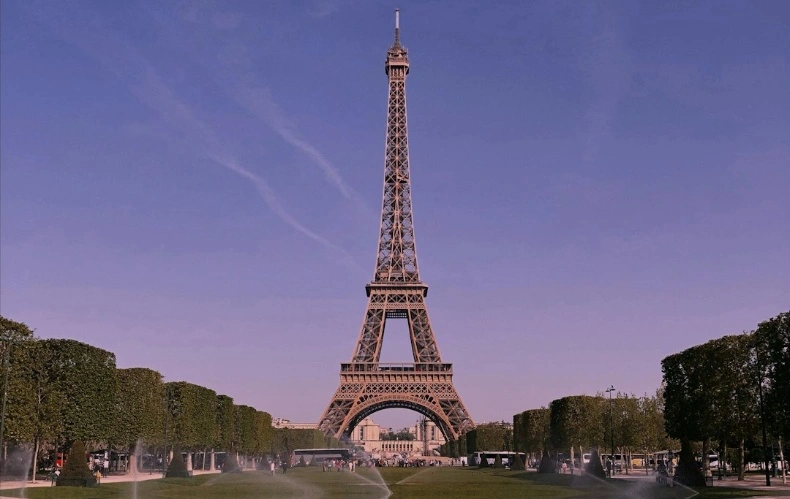
Paris Is Putting a Movie Theater Inside the Eiffel Tower This Week
Section: Travel
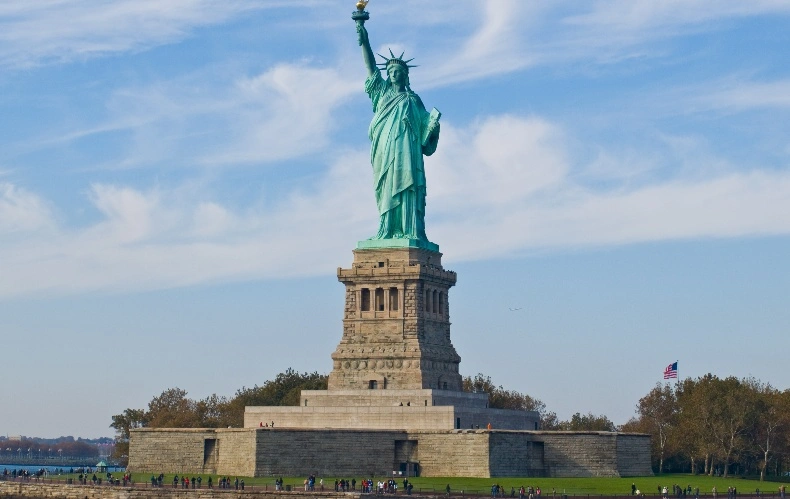
Most Americans know the Statue of Liberty as New York's harbor icon. Far fewer know she was hammered together, plate by copper plate, in a workshop in central Paris — and starting September 22, that story gets its own dedicated exhibition at the city's Musée des Arts et Métiers.
Lady Liberty: Sweat, Audacity, Genius runs from September 22, 2026, through August 1, 2027, timed deliberately to the 250th anniversary of the United States Declaration of Independence. The show reconstructs how sculptor Auguste Bartholdi, working with engineer Gustave Eiffel and a team of French blacksmiths, joiners, coppersmiths and sculptors at the Gaget, Gauthier & Compagnie workshops, built a 46-meter copper-and-iron statue roughly 93 meters including its pedestal designed to be shipped across the Atlantic in pieces and reassembled in New York Harbor.
The exhibition is built as an immersive walkthrough rather than a conventional glass-case display: visitors move through video projections, 3D installations and full-scale recreated workshop sets that reconstruct the plaster modeling, copper hammering and metal-frame assembly stages of the build, using headsets to follow the story scene by scene. Rare pieces from the museum's own collection are on view alongside it, including original plaster and copper models, casts, and full-scale elements of the statue itself among them a life-size copper index finger.
Eiffel's involvement predates his tower by several years, and it's a detail regularly overlooked outside France: he engineered the statue's internal iron skeletal framework, the structural system that let Bartholdi's copper skin flex slightly with wind and temperature changes without cracking an engineering problem more complex than it might sound for a statue of that height, and one Eiffel would draw on again in his later, more famous work.
The exhibition is housed at the Musée des Arts et Métiers, at 60 rue Réaumur in Paris's 3rd arrondissement, reachable directly by métro at the Arts et Métiers station (lines 3 and 11) or Réaumur–Sébastopol (lines 3 and 4). The museum is open daily except Mondays, generally 10am to 6pm, with later hours on Fridays. Ticket pricing has varied slightly across official and partner listings at launch, so it's worth checking the museum's own site, arts-et-metiers.net, directly before visiting rather than relying on a third-party listing.
For French visitors, this is workshop history and industrial craftsmanship. For American visitors, it's closer to seeing the origin story of a monument most grew up learning about only from the New York end Ellis Island, the pedestal fund, Emma Lazarus's poem. Very little of that popular telling touches on the Parisian half of the story: that Lady Liberty spent her first years as a set of disassembled copper panels in a French workshop yard, visible to Parisian passersby, years before she ever saw New York Harbor. The exhibition's timing next to the 250th anniversary of American independence makes that French chapter of the story hard to miss for the first time in most visitors' experience of either monument.
Sources: Musée des Arts et Métiers official exhibition page; RATP culture partnership announcement; Sortiraparis.
William Warby
Section: Travel
Section: Arts
Section: Fashion

Section: Business
Section: Travel
Section: News
Section: Arts
Section: Health
Section: Politics

Section: Science
Both private Health Insurance in Germany and public insurance, is often complicated to navigate, not to mention expensive. As an expat, you are required to navigate this landscape within weeks of arriving, so check our FAQ on PKV. For our guide on resources and access to agents who can give you a competitive quote, try our PKV Calculator.
Germany is famous for its medical expertise and extensive number of hospitals and clinics. See this comprehensive directory of hospitals and clinics across the country, complete with links to their websites, addresses, contact info, and specializations/services.
Didn't manage to get a ticket for Linkin Park? Or still not enough after the concert? Join us at CRASH on June 12th for our "IN THE END" Linkin Park Special + CORE NIGHT.All night long, we'll be playing Linkin Park's music, along with Nu Metal, Metalcore, and Alternative Rock from bands such as Limp...

No comments yet. Be the first to comment!