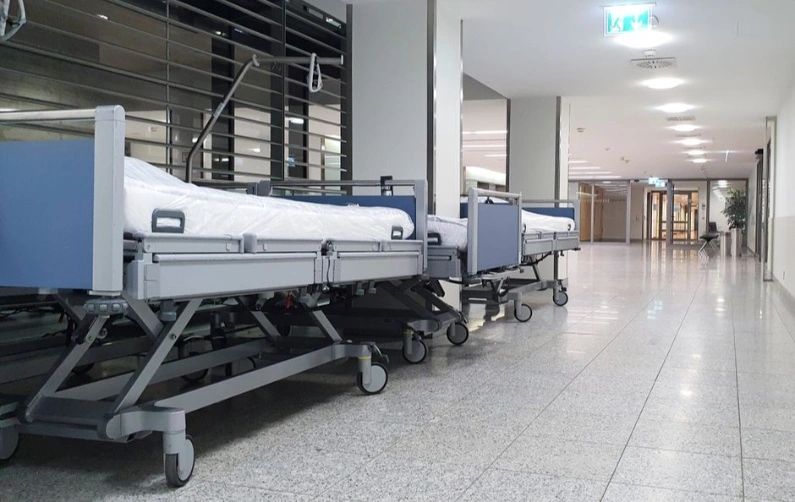
 France is set to reduce the number of full hospital beds by 2,000 in both public and private healthcare facilities by 2025, according to a report by the Directorate of Research, Studies, Evaluation and Statistics (DREES). This decision follows extensive evaluations of healthcare services, aligning with efforts to optimize healthcare resources amidst growing pressures on the system.

Google Parent Alphabet Loses About $500 Billion in a Day, Its Worst Stock Drop Ever
Section: Business
The report highlights a significant shift in the country's healthcare landscape, with the reduction coming as part of a broader strategy to revitalize and reallocate healthcare services. While this move may initially raise concerns about accessibility and patient care, healthcare experts emphasize its intended benefits in consolidating and improving efficiency within the healthcare sector.
Interestingly, despite the overall reduction, the report notes a "unprecedented rebound" in the public sector, which will see an increase of 200 beds in 2025. This development suggests a nuanced approach where certain areas of the public healthcare system will receive bolstering, reflecting varying demands and pressures faced by hospitals across the nation.
The French healthcare system is experiencing continuous adjustments as part of efforts to address the evolving medical needs of the population. The DREES report underscores the necessity of such transitions in maintaining a robust healthcare framework. It details how centralizing bed usage and streamlining services could alleviate strain on facilities, enabling more targeted and effective patient care.
The decision to reduce beds comes amidst a backdrop of challenges including financial constraints, demographic shifts, and technological advancements in healthcare. The increasing adoption of outpatient care and advancements in medical technologies play a significant role in reshaping how hospital resources are allocated.
The reduction is anticipated to impact both urban and rural healthcare facilities, prompting discussions about maintaining access to essential care services for all population segments. Public health officials are keenly aware of the potential implications and are reportedly working on strategies to ensure that patient access to necessary treatments remains uncompromised.
Stakeholders in the healthcare sector, including hospital administrators and medical professionals, have been engaging in dialogues with government representatives to better understand the implementation process and mitigate any disruptions that could arise from these changes. The aim is to ensure a smooth transition that aligns with France's healthcare objectives while also catering to patient needs.
This strategic adjustment aligns with broader European trends where healthcare systems are recalibrating resources in response to economic pressures and changing patient demographics. Such measures resonate with ongoing themes of adaptability and sustainability within global healthcare paradigms.
Healthcare unions and advocacy groups have expressed both support and concern over the potential effects of reducing full hospital beds. Some argue that this move represents a necessary evolution in aligning services with current demands and technological capabilities. Others caution that careful monitoring will be essential to avoid unintended negative impacts on patient care quality and access.
The Ministry of Health is currently overseeing the deployment of this policy change, ensuring that all transitions are handled with sensitivity to the needs of both patients and healthcare providers. There is an emphasis on maintaining transparency and open communication with the public to allay fears and clarify the objectives of these measures.
As France proceeds with this structural shift in its healthcare system, ongoing assessments and feedback mechanisms are expected to guide further adjustments. The focus remains on optimizing healthcare delivery while recognizing the critical role hospitals play in the comprehensive care model. As data becomes available post-implementation, more insights will help refine these strategies to better serve the French population.
Source: lemonde.fr
Photo by adrian vieriu on Pexels
Section: Business
Section: Health

Section: Arts

Section: News

Section: News

Section: Arts

Section: Arts

Section: News

Section: News

Section: News
Both private Health Insurance in Germany and public insurance, is often complicated to navigate, not to mention expensive. As an expat, you are required to navigate this landscape within weeks of arriving, so check our FAQ on PKV. For our guide on resources and access to agents who can give you a competitive quote, try our PKV Calculator.
Germany is famous for its medical expertise and extensive number of hospitals and clinics. See this comprehensive directory of hospitals and clinics across the country, complete with links to their websites, addresses, contact info, and specializations/services.
Didn't manage to get a ticket for Linkin Park? Or still not enough after the concert? Join us at CRASH on June 12th for our "IN THE END" Linkin Park Special + CORE NIGHT.All night long, we'll be playing Linkin Park's music, along with Nu Metal, Metalcore, and Alternative Rock from bands such as Limp...



No comments yet. Be the first to comment!